Thursday March 12, 2026
SPAM Goes to War and Comes Home Again
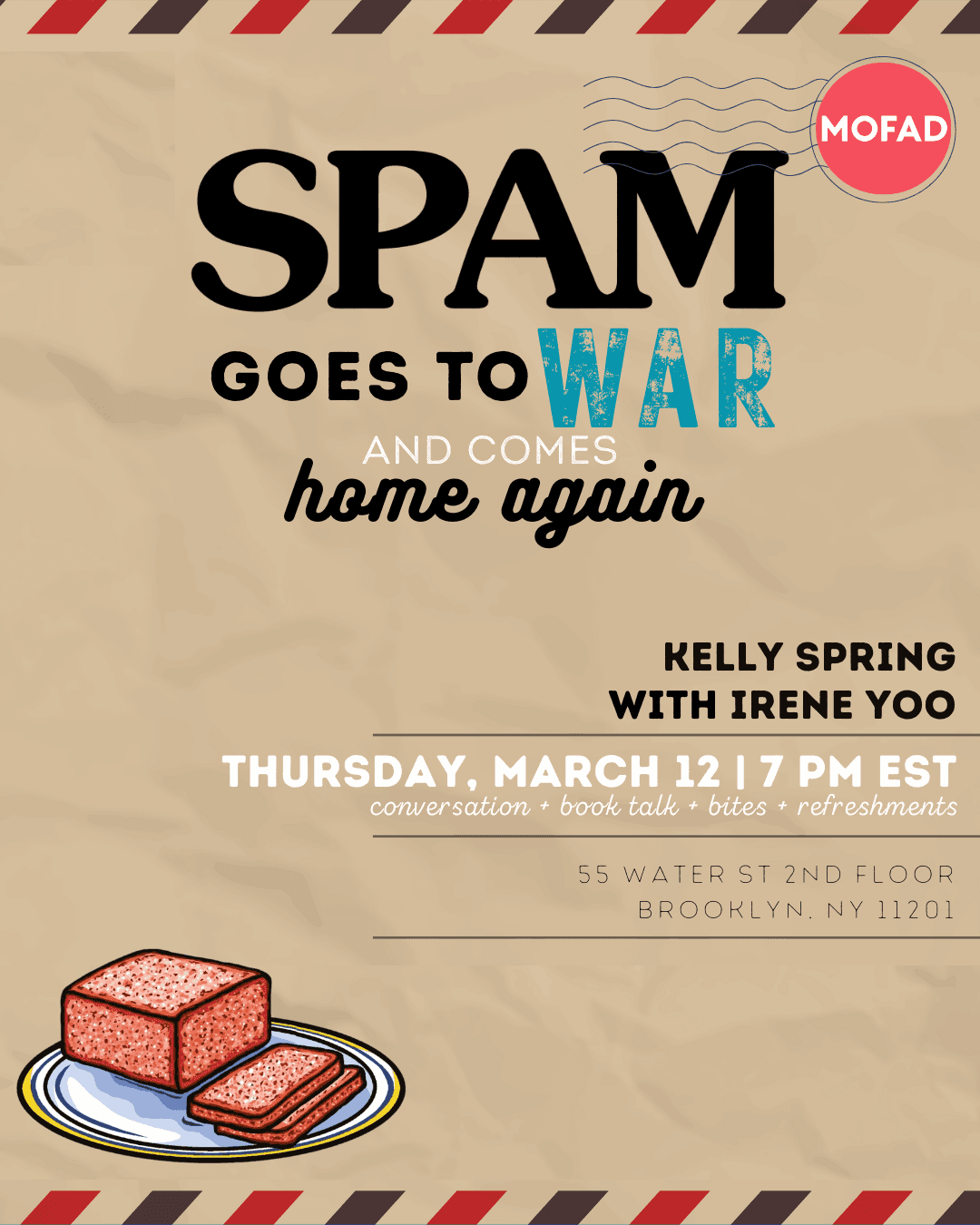
Nearly 13 tins of SPAM are eaten each second around the world. Born in Minnesota in 1937, SPAM has become a global food associated with many different cuisines, especially Korean foodways. The Korean War brought American soldiers with diverse foods to the Korean Peninsula, notably SPAM. US soldiers handed it out, bartered it for information, or sold it to the hungry. Such acts functioned as a form of “gastrodiplomacy,” often enabling positive and lasting impressions of the Americans and their food on the Peninsula long after hostilities had ceased. But what started out as a temporary, wartime necessity has become an ingrained element of Korean culinary tradition, impacting cookery habits for generations. The practice of eating SPAM still resonates today with those in South Korea, as well as those in the Korean diaspora. Join Kelly A. Spring (SPAM: A Global History) and Irene Yoo (Soju Party: How to Drink (and Eat!) Like a Korean) as they discuss the remarkable history of SPAM in Korea and the longevity of the canned pork product in Korean American communities in the United States.
Tickets include access to Street Food City from 6 to 7 PM, a SPAM-inspired drink from Orion Bar, and SPAM bites.
Courtesy of our partner bookseller Kitchen Arts & Letters, copies of SPAM: A Global History and Soju Party: How to Drink (and Eat!) Like a Korean can be pre-purchased in a ticket bundle and during the program.